Garden issues and how to solve them
If your garden is not quite perfect, you’re certainly not alone. Let’s take a look at 6 common garden issues and how to overcome them.
Gardens are like people. Every one of them is unique and wonderful, but none of them are completely perfect. In this article I’m looking at some common garden issues that I get asked to solve through garden design and landscaping.
Sloping Gardens
Living and working in Somerset, I get to see lots of sloping gardens. And whilst an untamed slope can create issues for accessibility, once it has been landscaped, it becomes a thing of beauty.
How you deal with garden issues such as slopes depends almost entirely on the budget you have available. Will you bring in machinery to dramatically re-contour the garden? Taking care of course not to disrupt the drainage. Or will you create a series of flat terraces with steps or ramps from one to the other?
You could create a structure – perhaps a cantilevered deck – to make a flat area for seating and eating. Or you could build a series of interlinking small terraces and plant up the slopes around them.

Curved steps help visitors to this home to navigate the steeply sloping garden.
Slopes are one of the garden issues that may need input from a structural engineer, particularly if there are retaining walls to be built. But honestly, there’s always a workable solution for sloping gardens. You just might need the help of an imaginative garden designer to find the answers you are looking for.
When Your Garden Is Shaded
The UK is blessed with some wonderful weather. Cheery spring sunshine, long summer days, soft autumnal light and bright winter frosts. But we all feel we can only enjoy our gardens when they are basking in the sunshine. to be able to enjoy the weather in your garden, you need to That’s not true. You can have an awful lot of fun designing a shaded garden too.
Start by assessing the cause of the shade. Are the fences high and impenetrable? Is there a tree blocking your light or is the problem simply that your patio is in the wrong place?
There are no rules that say your garden furniture should sit on a stone slab beside your back door. You can site a patio or deck wherever you want to in your garden, provided it’s not high enough for your neighbours to feel as though you are watching them.
If you can identify the reason for the shade, and then remove the culprit, that will help to brighten your garden. For example, by putting the shed in a different part of the plot or lifting the crowns of nearby trees (provided of course you have the right permissions to do so)
Use water and/or mirrors to bounce light around the plot. And choose a plant palette that will help the space feel brighter. Using light coloured hard landscaping materials can help too. Perhaps an ivory coloured porcelain patio with walls or planters clad in a similar colour?
Don’t despair if your garden is shaded. It’s one of those garden issues that we garden designers love to work on. You’d be surprised at the way we can improve it for you.
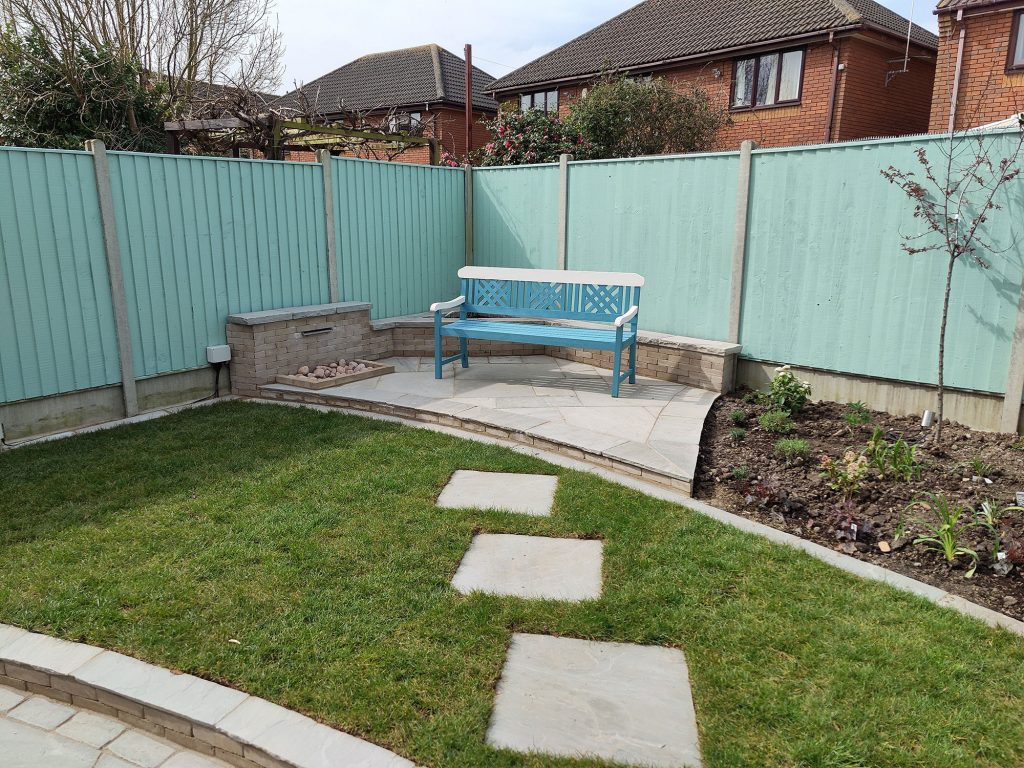
Make the most of corners in an overlooked garden – often they can’t be seen from neighbouring properties. Planting a tree will also provide a privacy screen.
Noise From Outside Of The Garden
I love to hear birdsong coming from beyond a garden and I quite like to hear the joyful sound of children in the school playground. What I’m not so impressed with are things like road noise, jets, the neighbours’ dog barking for hours on end or passers by talking loudly.
Good garden design and landscaping can help to alleviate garden issues with noise. Building sound barriers with fencing and hedging is one way. Or how about making a pretty little arbour with a sound resistant roof and walls?
You could also use sounds within your garden to train your hearing to ignore sounds from beyond the fence. Moving water, tinkling wind chimes, music or bird song are all wonderful distractions.
Read more about managing noise in the garden.
It’s Too Much Like Hard Work
Plenty of people fall out of love with their gardens because they simply can’t keep up with the maintenance. I totally get that. When I arrive home of an evening after 12 hours on the tools, the last thing I feel like doing is weeding.
So how can you reduce the maintenance needs of your garden?
You could replace the lawn with a gravel garden. Not quite as comfy for walking around barefoot but it won’t need mowing.
Or how about some paving interspersed with easy-to-maintain raised beds?
A planting refresh could make an enormous difference too. And sometimes, giving your outdoor space a new look can revive your interest in gardening. Maintenance issues are almost always easy to overcome with garden design and landscaping.
Take a look at this case study where the SilverBirch Gardens team have created a low maintenance garden with an exotic feel.
The Garden Is Overlooked
Privacy is important, especially in your own garden. There’s nothing worse than feeling as though you might be being watched.
Garden issues like neighbouring properties overlooking your plot are easier to solve than you might think. A strategically placed line of pleached trees will usually do it. Or perhaps a pergola draped in greenery. Another trick is to position your patio in a part of the garden that can’t be seen from next door. Usually in a corner.
There are all kinds of design tricks to overcome garden issues like privacy and most of them look so lovely that they don’t offend the neighbours at all. Please don’t abandon your outdoor spaces because they are overlooked – call me instead. Together we can overcome the problem.

Sturdy steps and gently sloping ramps make a garden feel more accessible
Accessibility
Not being able to reach every part of the garden is an issue for some. For others, the garden is too accessible and they worry that their toddlers and/or pets can’t be left outside unsupervised. Again, sympathetic garden design exists to help you find an attractive way around your garden issues.
It might be something as simple as erecting hand rails alongside a path. Or reconfiguring steps so that the risers are shallower and the treads are deeper. We can build ramps for buggies and wheelchairs. A covered patio or walkway can make a safe and easily supervised outdoor room. We’ve not been asked to do it yet, but I’m sure we’d also be able to design a garden where a stairlift can help you negotiate the different levels. Where there’s a will (and an adequate budget) we’ll always find a way.