Grow Your Own Christmas Decorations For Next Year
Dispell the winter blues and any worries about the cost of living, by turning your mind to growing your own Christmas decorations for next year.
Christmas is over for another year and hopefully you managed to take the decorations down before twelfth night. Some say that leaving them up brings bad luck, others suggest that you can delay their demise until shrove tuesday, make a bonfire with them and then cook your pancakes over the fire.
Whichever route you take to putting Christmas to bed, none of us can deny the wellbeing aspect of bringing the outdoors indoors at the time of year when the days are short and there’s a distinct lack of sunshine. I love the smell of fresh foliage and the way it seems to bring a different kind of energy into a space. If you feel the same way, and like the idea of a home-grown Christmas, here are some tips on growing your own Christmas decorations for next year.
10 Ideas For Grow Your Own Christmas Decorations
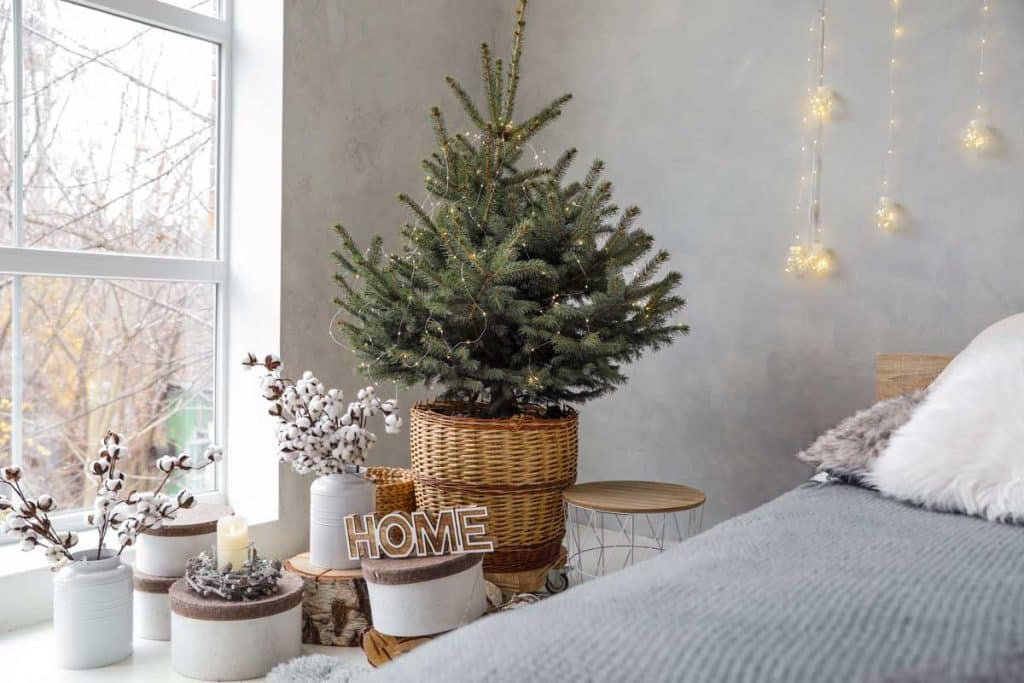
- Plant a Christmas tree in a pot so that it can live in the garden for 50 weeks of the year and be brought indoors for the festive season
- Create a winter with carefully chosen plants that can be harvested to make decorations.
- Don’t cut back that ivy! Encourage it to twirl around posts and plants so that you can snip pieces off it to use in wreaths and garlands.
- Plant some spring flowering bulbs and plants in pots
- Seed heads can look spectacular when dried and sprayed with glittery paints
- Think about scent – can you grow herbs and use the foliage to perfume your home?
- Re-use selected items of garden waste. Thick tree trimmings can be turned into beautiful candle holders as a nod to the pagan yule log tradition. Whispy twigs can be spray painted and used in wreaths, garlands and flower arrangements.
- For Christmas colour, think about berries but also mahonia flowers, Chinese lanterns (the plant Physalis alkerkengi), stems, ‘forced’ spring flowering bulbs, rose hips, dried flowers and spray painted twigs
- Store apples from your own tree to use in decorative displays
- Take a walk in the woods in mid-autumn and collect a big basket full of pine cones and acorns. Foraged plant material is just as satisfying as home grown. But please, never take pieces of live trees and plants and always ask the landowners permission to take anything at all.
Growing A Christmas Tree In A Pot
I prefer a natural Christmas tree to a plastic one but I do admit to having qualms about chopping down a healthy tree, bringing it indoors for a couple of weeks and then discarding it. Even though it can be sent for recycling or donated to the local animal park for enrichment activities – it just seems such a waste.
However, I do like the idea of growing a tree in a pot so that it can be used time and time again as Christmas decorations and still be a friend to wildlife for most of the year.
Realistically, we’re probably talking about starting with a small tree – table decoration sized – and repotting it every year as it grows. And of course you’ll need to keep it well watered in the summer months. But by containing root growth you negate the risk of damaging the roots each time the tree is moved.
As the tree (and its pot) gets bigger, it will become heavier and so you will reach a point where it is impractical to keep moving it. And at that stage it can of course be given a permanent position in the garden along with some lighting so that it can still be part of your Christmas decorations.
Creating A Winter Garden
Most of us have specific zones in our garden. There’s the veg patch, the lawn, the bin stores and of course, the seating and eating area. Why not use one area as a winter garden? Really think hard about the layout, how you might use it, and what plants to use.
Not only will you have a special place to entice you out of doors for some much needed winter fresh air. You can use your winter garden to nurture the foliage, seedbeds and stems Harvesting stems, foliage and seedbeds from this part of the garden will give you everything you need for spectacular natural Christmas decorations.
What To Plant In A Winter Garden
Start with the ‘standard’ Christmassy type plants that will produce the bulk of the foliage for your indoor displays. Holly, a selection of conifers, laurel and perhaps rosemary too. Then think outside of the box to add interest to your garden and to your flower arrangements.
Some rose species have spectacular hips in the winter time. Choose your variety with care and resist the temptation to dead head the flowers in summer time.
How about ornamental grasses? The seed heads can be majestic and there’s a wonderful range of sizes and textures to choose from.
Winter flowering plants include mahonia with its shiny green leaves and big bright yellow flowers. It’s a really useful shrub to have in the garden as it provides food for late flying bees.
Then there’s Physalis alkerkengi – the Chinese lantern plant. Pretty and delicate orange ‘baubles’ appear in autumn and generally stay for most of the winter. You could of course gather stems before Christmas and hang them upside down indoors to dry and preserve them.
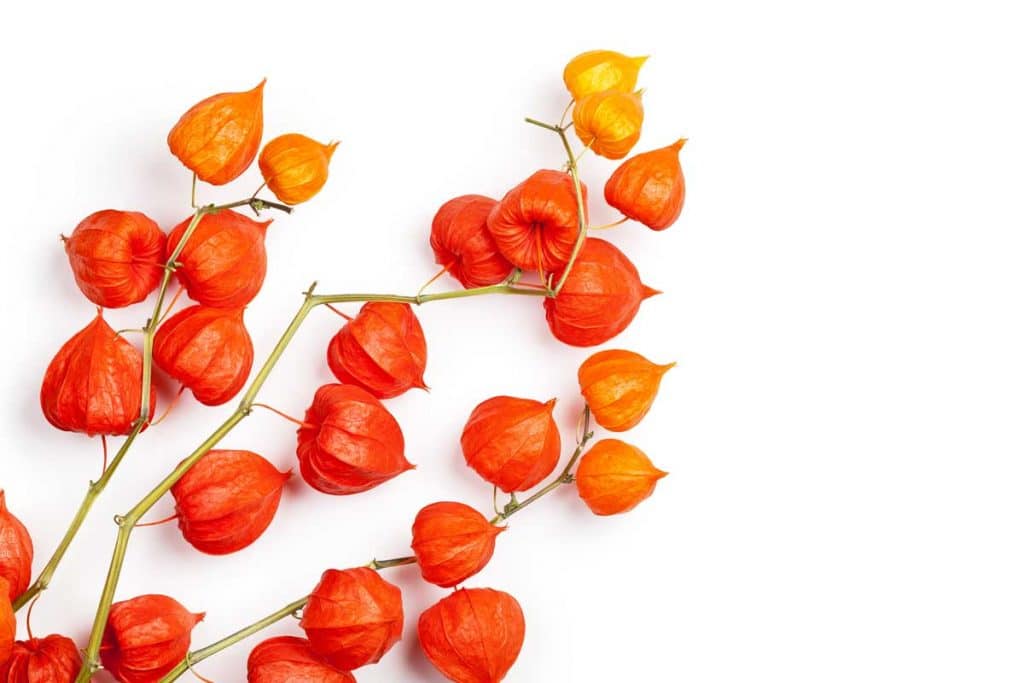
Brightly coloured seed heads of the chinese lantern plant – super for autumn and winter flower arrangements.
Another great plant for winter interest is Cornus. The dog wood. It’s incredibly easy to grow and has strikingly coloured stems. Those stems need to be pruned every winter and so gathering a few to use as Christmas decorations is a no-brainer.
I also like to use Sarcococca in a winter garden – aka sweet box. It’s wonderfully scented but the perfume might be a little overpowering for indoor use. Outside the house though, it’s an absolute joy!
Fatsia japonica has huge, exotic looking leaves that keep their colour in winter. It’s ideal for a variation on the traditional Christmas display.
Lunaria annua (aka honesty) has purple, bee-friendly flowers in summer which give way to seedbeds that resemble shiny silver pennies. Honesty is well worth cultivating to use in Christmas decorations. You could also try oriental poppies with their lovely big seed heads that just beg to be smothered in glitter.
Oh – and don’t forget lighting in your winter garden. It’s a great way to create a winter wonderland outdoors as well as indoors.
Cut and Dried
For a retro look to your Christmas decorations, how about using colourful flowers that you’ve grown and preserved yourself. Drying flowers is quite an art form and can be really satisfying. Use your dried flowers in arrangements, in wreaths, as gifts, for a table centre piece or attach them to gift labels for a lovely decorative touch.
The flowers themselves will look pretty in your summer garden before they decorate your home in winter. You really do get good value from them!

This article from Garden Patch explains how to grow and dry flowers.
I hope I’ve inspired you to try growing your own Christmas decorations for next year. At the very least, you should be thinking about ways of creating winter interest in your own garden.
Read my blog on the 12 best plants for winter interest.
5 secrets of great garden design.
.