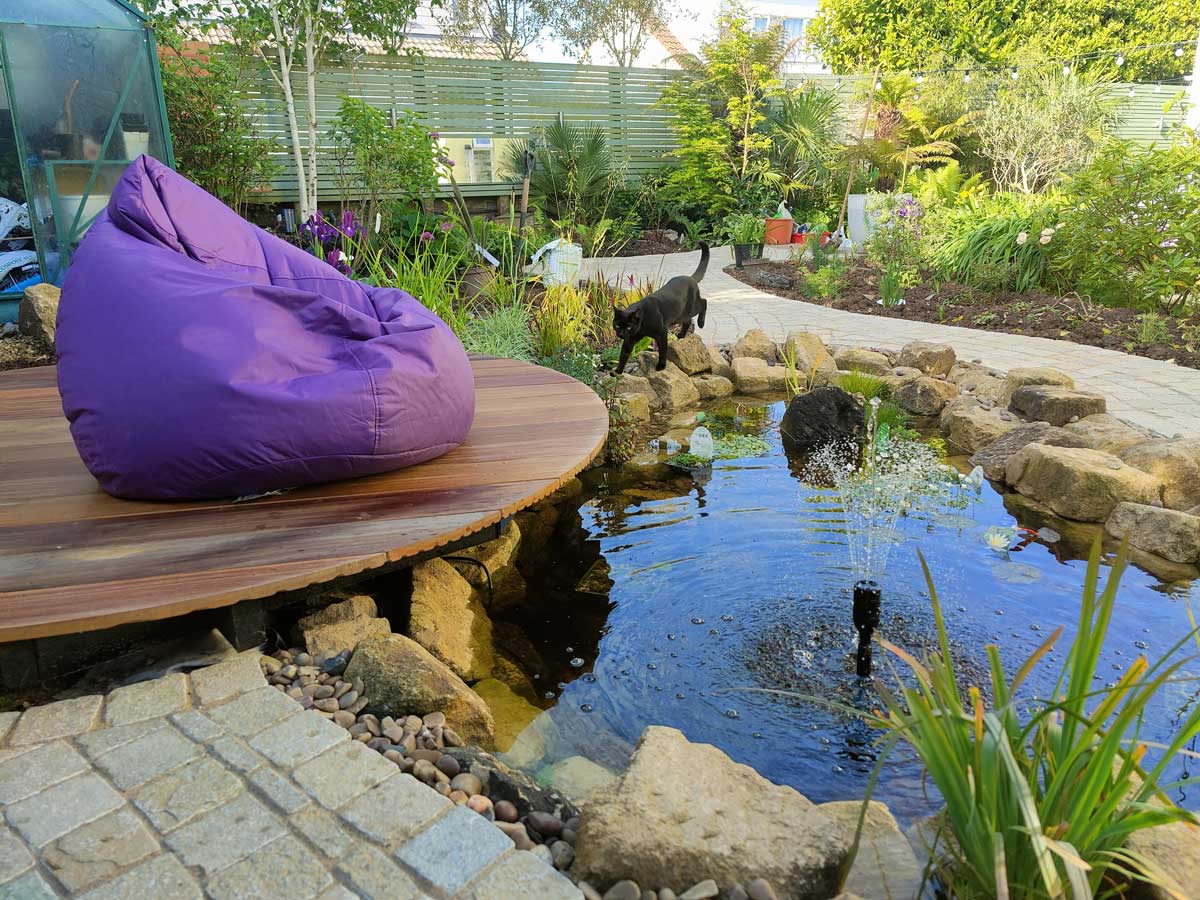
What Is A Wellbeing Garden?
What is a wellbeing garden and how could it enrich someone’s life? That’s the question I’ll try to answer with this blog.
As a garden designer and landscaper I pride myself on building gardens which evoke a sense of peace, harmony and contentment. But all of those things are intangible. You can’t buy them from a supplier and install them into a garden. They are a result of understanding someone’s personality and creating a space that will makes them feel so comfortable that their heart rate slows, and their thoughts become quieter. If you read on, I’ll share some of my secrets with you.
What Is Wellbeing?
The organisation, wellbeingpeople.com have a great way to define wellbeing.
“Wellbeing prefers to a state of being healthy, happy and comfortable both physically and mentally. It encompasses a sense of contentment and satisfaction with your life and a positive outlook on your personal and professional experiences.”
In other words, wellbeing is something we all aspire to. It’s not about financial wealth or the number of instagram followers somebody has. Neither is it about being super-fit, incredibly brainy or stunningly good looking. It’s about feeling satisfied with life – if only for a moment or two. And I think that a wellbeing garden is one of the best places to evoke that wonderful feeling of peace, contentment.

Creating distinctive zones within your garden allows you to choose how you will use each space. Somewhere for entertaining, somewhere for contemplation, somewhere in the sunshine, somewhere in the shade.
How Can A Wellbeing Garden Help?
The mental health charity, mind.org.uk talks about 6 things that can help you achieve a state of wellbeing. And I think that at least 5 out of those 6 can be related to gardens and gardening. Particularly if a garden has been designed and built with wellbeing in mind.
- Relax and reduce stress
- Find ways to learn and be creative
- Spend time in nature
- Connect with others
- Look after your physical health
- Try to get enough sleep
Each and every one of us has their own sense of what makes us feel safe, relaxed and open to engaging with our environment. For some, it might be minimalist lines with no clutter. For others it is being surrounded by things that bring us joy. A wellbeing garden needs to be a reflection of its owners’ personalities. If the layout, styling and levels of maintenance are wrong for that person, the garden will be a source of stress rather than a relaxing haven.
Creating A Relaxing Garden
What helps you to relax and unwind? I always think that it helps to feel physically comfortable before your mind can start to decompress. So not to hot and not too cold. Position your seating area where it catches the sun, but add some kind of shade in case you need it. Protect the area from drafts too. Although a gentle summer breeze can feel quite nice, a cold blast of air is less pleasant.
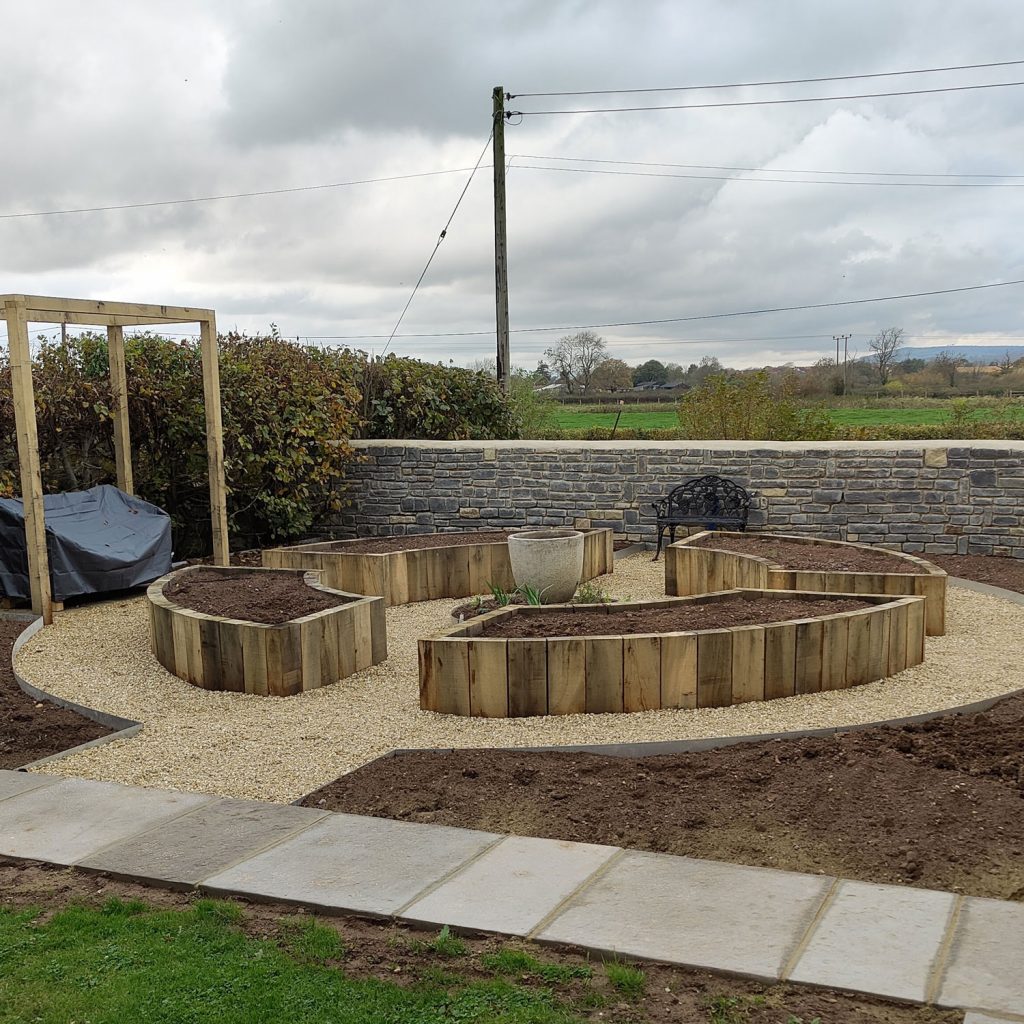
A wellbeing garden needn’t be enormous, and it certainly doesn’t need to be high maintenance. This arrangement of raised beds and seating areas creates a feeling of being hugged by nature but also of being part of the wider landscape.
Seating
A comfortable seat that supports your body, that way you don’t need to slouch or adopt strange postures to stop yourself falling over. This could be a sofa, a lounger or even a hot tub. Ideally, there’d be a great view. It’s not possible to control the views outside of your garden, but you can position yourself so that you’re looking at a beautifully planted area rather than into your neighbours’ windows.
Sounds
Gentle sounds. The sounds of nature rather than road noise or shouty voices. Again, you cannot control what goes on on the other side of your fence, but there are a few landscaping tricks you can use to reduce unwanted noise. Read my blog for tips on landscaping to block noise.
Embraced By Nature
Try to encompass a sense of being surrounded by nature by using living plants in your garden. They don’t have to be time consuming to care for. You can even choose plants that won’t aggravate your hay fever. You can also use lighting to accentuate the feeling of being hugged by nature.

Garden lighting offers a feeling of security – even if you are sitting indoors and viewing the garden through a window.
Connecting With People
Design a space where you can connect with other people on your terms. Feeling connected to other people is an important factor in wellbeing. Loneliness is awful. But it is perfectly possible to be surrounded by others and still feel alone. It’s also true that sometimes we all of us need time alone in order to process thoughts and relax properly. Make sure that your wellbeing garden gives you the option to spend time with family and friends or to retreat into a space all of your own. It’s also great if you garden also makes you feel as though any individuals who sap your energy and knock your confidence are far away on the other side of the wall.
Boosting your physical health
Wellbeing isn’t about being super-fit, it’s about feeling as though you are coping with life. A wellbeing garden shouldn’t be filled with features that you cannot use or enjoy. If you have mobility problems, install ramps instead of steps, or ask your landscaper to create sturdy hand rails. Raised beds can be tended without bending down. And if mowing is difficult for you, there are plenty of alternatives to natural lawn.
Gentle gardening though, is a truly relaxing pastime. Deadheading, pruning and a little bit of weeding will all make you feel as though you have achieved something. In addition, scientist believe that some soil microbes are natural antidepressants. And so, contrary to what Granny used to say, getting your hands dirty really is good for you.

Water in the garden helps to slow our heart rate and breathing and encourages our minds and bodies to reboot.
My Secret To Landscaping For Wellbeing
The secret to landscaping for wellbeing is to tailor a garden to the needs of the people who will be using it.
- Find out what irritates them, what makes them feel safe and how much (if at all) they like gardening.
- Discover what they like to do when their time is completely their own and make sure the garden facilitates that. Maybe they need a studio for crafts, an outdoor gym, somewhere to sit and read, or a place to cook.
- Make sure that the layout of the garden ‘flows’ and that anyone feels invited to step outdoors and explore. A wildlife pond for example always has something new to see, and a well designed planting scheme will be filled with seasonal delights.
- Give the garden some unique features and a sense of creativity things that cannot be found anywhere else. Things like the laying pattern of a brick path can exude character. As can the combination of landscaping materials used.
- Appeal to all of the senses, but particularly sight, sound, touch and scent.
Finally, build the garden with love. I know that sound’s daft, but if your landscaper truly enjoys bringing the design to life, you will feel it in the finished garden.
You may also like this article on the psychology behind landscaping for wellbeing.