Think Small! Why Paving Shouldn’t All Be About Large Tiles
Think Small! Why Paving Shouldn’t All Be About Large Tiles
When it comes to modern garden design, large-format paving slabs have become increasingly popular. Clean lines, generous proportions and fewer joints can create a contemporary look that works beautifully in many gardens.
But bigger isn’t always better.
Some of the most interesting and characterful gardens use smaller paving materials, including clay pavers, limestone setts, cobbles and smaller natural stone units. Used carefully, these materials can add texture, definition, rhythm and detail without overwhelming the overall design.
At SilverBirch Gardens, we believe successful garden design is about much more than choosing a paving material. The architecture of the house, proportions of the garden, planting, levels, pathways and how the space will be used all need to work together.
Sometimes, thinking small can make a surprisingly big difference.

Clay Pavers: Warmth, Texture and Character
Above is an excellent example of Antique Red Clay Pavers used in a traditional garden setting. Read more about this project here..
Clay pavers are an excellent way to introduce warmth and texture into a garden. Made from fired clay, they have natural variations in colour and texture that can work particularly well alongside planting and other natural materials.
Depending on the product and laying pattern, clay pavers can create anything from a traditional country-garden feel to a much more contemporary appearance.
They can be used for:
- Patios
- Garden paths
- Courtyards
- Steps
- Edging details
- Terraces
- Seating areas
- Driveways
- Decorative bands within larger areas of paving
One of the biggest advantages of clay pavers is their versatility. They can be laid in patterns such as stretcher bond, basketweave, herringbone and running bond, allowing the paving itself to become part of the garden design.
A simple change in laying direction can also create a subtle distinction between different areas of a garden.
For example, a patio could be laid predominantly in one direction with a contrasting clay-paver border around the perimeter. The result can be considerably more interesting than simply laying one material from edge to edge.
Click here for a great example of this in a Contemporary style garden..

Limestone Setts: Small Details With a Big Impact
Natural limestone is a popular choice for patios and pathways, but limestone setts offer another way of using this versatile material.
Rather than large paving slabs, setts are smaller pieces of stone that can be incorporated into a garden in a variety of ways.
They can be used as a complete paving surface or, perhaps more effectively, as a contrasting detail within a larger design.
Imagine a large limestone patio with a narrow band of limestone setts running around the edge. This simple detail can create a defined border, helping to frame the patio and give the space a more considered appearance.
Limestone setts can also be used to:
- Define different areas of paving
- Create borders around patios
- Separate planting beds from paving
- Highlight changes in level
- Form pathways
- Create attractive edging
- Frame garden steps
- Introduce curves into a formal design
These smaller units give a garden designer considerably more flexibility when creating detailed layouts.
Why Use Small-Format Paving?
One of the biggest advantages of small-format paving is scale.
Large paving slabs can look fantastic in the right setting, but they can sometimes feel visually dominant, particularly in smaller gardens. Smaller paving units can create a more intricate appearance while introducing rhythm and texture.
This doesn’t mean large-format paving should be avoided. Far from it.
The key is choosing a paving format that works with the proportions and character of the garden.
A small courtyard covered in enormous slabs may feel slightly out of scale. Conversely, a large contemporary garden could benefit from the simplicity and expansive appearance of large-format paving.
Good garden design considers the relationship between the size of the paving, the size of the space and the surrounding architecture.
Adding Interest to a Simple Patio
You don’t need a complicated garden design to benefit from small paving details.
In fact, one of the most effective uses of clay pavers or stone setts can be within an otherwise straightforward patio.
Consider a simple rectangular limestone patio. On its own, it might consist of paving laid in a regular pattern. Introduce a border of contrasting limestone setts and the entire design can immediately feel more defined.
Alternatively, a row of clay pavers could be introduced between the patio and a planting border.
Feeling bold…why not try using Granite cobbles to define the whole patio, like we did here..
The overall design remains simple, but the smaller element creates a visual transition between the hard landscaping and planting.
This is an important principle in garden design: small details can make simple spaces feel deliberately designed rather than merely functional.
Creating Transitions Between Materials
Gardens often contain several different materials. You might have a limestone patio, gravel path, brick wall, timber seating area and planted borders.
The challenge is making these materials work together rather than appear as unrelated elements.
Small-format paving can help create these transitions.
For example, a line of limestone setts could be used between a limestone patio and gravel pathway. The setts act almost like a punctuation mark between the two surfaces.
Similarly, clay pavers can provide a transition between a brick building and a natural stone patio, helping to visually connect the architecture with the landscape.
This is particularly useful in garden design and landscaping projects where several materials need to be brought together into one cohesive scheme.

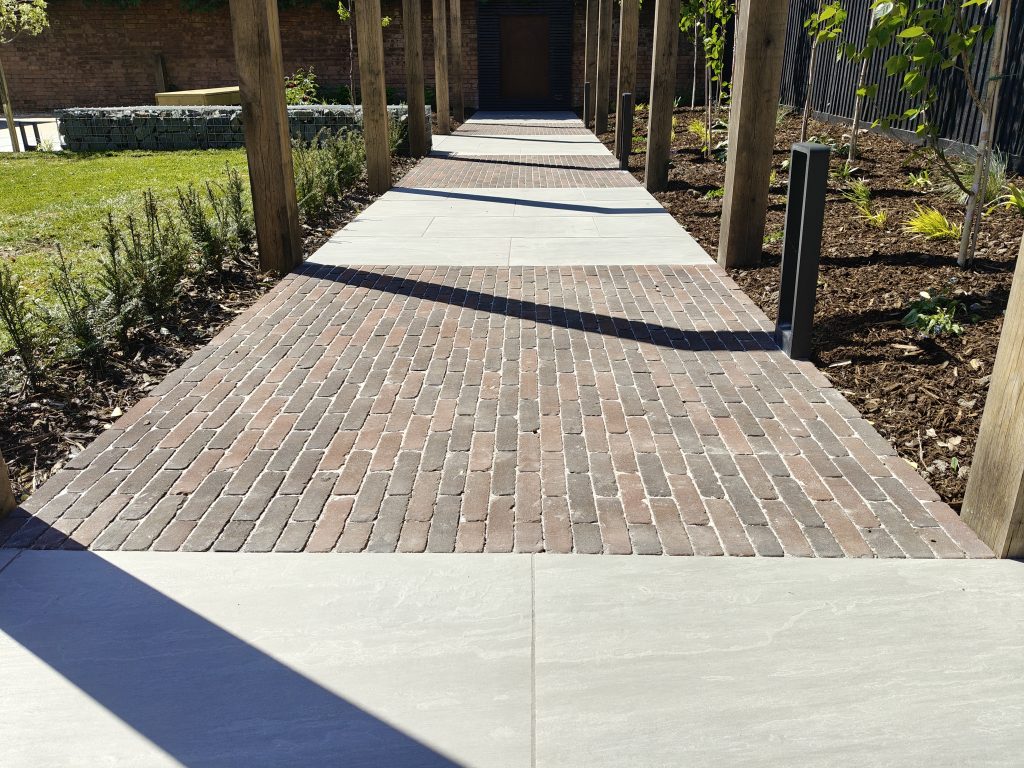
Dark Grey clay pavers contrasting well with stone and timber
Cobbles Aren’t Just for Traditional Gardens
Cobbles and setts are sometimes associated with historic properties, traditional courtyards and country gardens.
However, they can work extremely well in contemporary garden design too, like here..
Used selectively, cobbles can provide texture and contrast against clean architectural materials.
For example, a contemporary garden might combine:
- Large-format limestone paving
- Dark gravel
- Architectural planting
- Timber screening
- Contemporary outdoor furniture
- A narrow cobbled detail
The contrast between clean lines and irregular texture can make the overall design much more interesting.
The key is restraint.
Small-format materials don’t necessarily need to cover an entire garden. Sometimes a narrow strip, border or small feature is all that’s required.
Using Setts to Define Garden Rooms
Modern garden design often involves dividing a garden into different outdoor rooms.
You might have a dining terrace close to the house, a separate seating area further down the garden and a quieter space for planting or relaxation.
Setts and cobbles can help distinguish these areas without requiring walls or fences.
A change in paving material or laying pattern can subtly signal that you’ve moved from one garden room to another.
For example, a large limestone terrace could transition into a smaller clay-paver seating area, with a planted border helping to soften the connection.
The materials create a visual hierarchy while keeping the garden open and connected.
Small Paving Works Particularly Well With Planting
One reason we like small-format paving is the relationship it can create with planting.
Large areas of paving can sometimes create a strong expanse of hard surface. Smaller units introduce more joints, texture and visual detail, which can sit comfortably alongside softer planting.
This can be particularly effective in naturalistic or traditional garden designs.
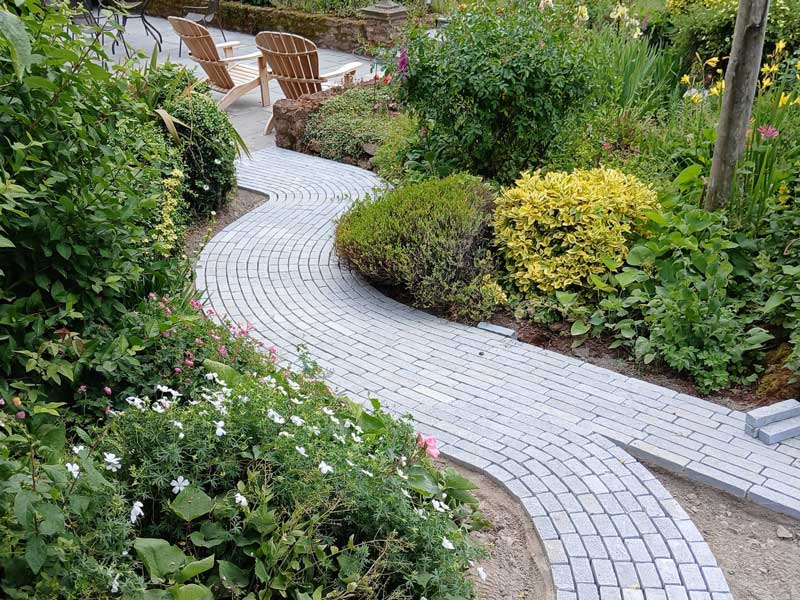
Imagine a clay-paver path winding through perennial planting. The smaller paving units can complement the informal character of the planting far more naturally than a series of enormous geometric slabs.
Equally, limestone setts can provide a crisp edge to a planting border within a more formal garden.
The material doesn’t have to dictate the style. Its appearance, colour, laying pattern and relationship with other materials all contribute to the finished design.
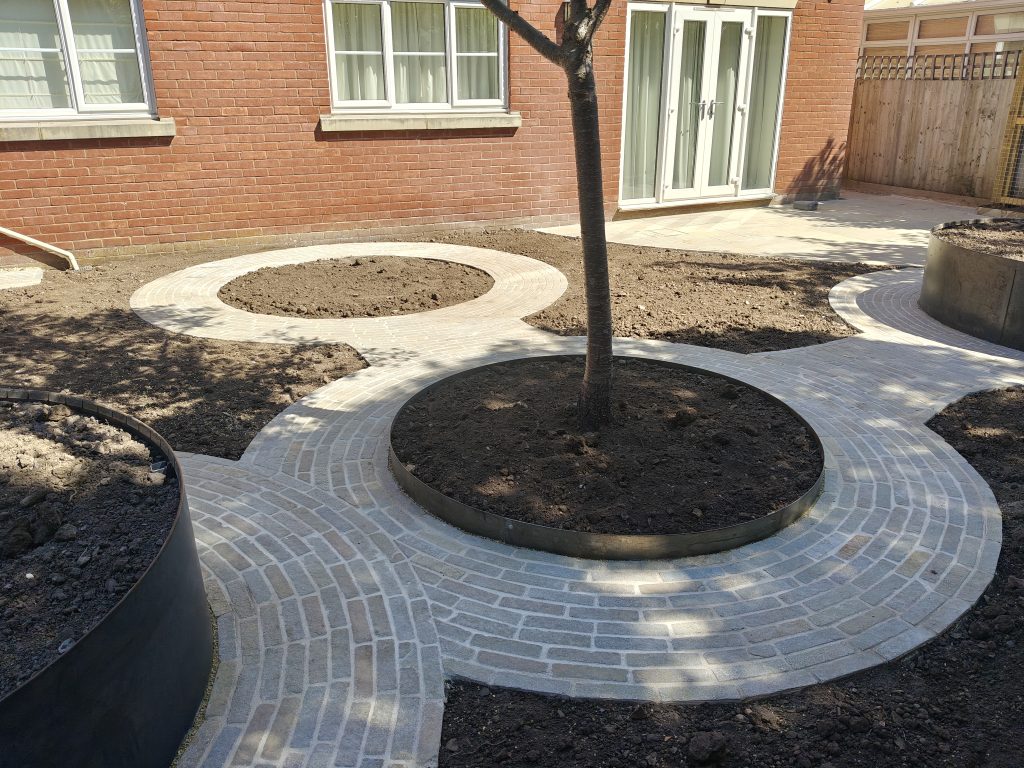
Limestone pavers creating curved beds ready for planting
Creating Curves and Intricate Details
Small paving units can also offer greater flexibility when designing curves and more intricate shapes.
A large slab may need to be cut significantly to follow a tight curve, whereas smaller units can often follow the shape more naturally, depending on the chosen material and installation method.
This makes cobbles, setts and clay pavers particularly useful around:
- Circular patios
- Curved pathways
- Tree surrounds
- Planting islands
- Fire-pit areas
- Water features
- Garden steps
- Raised beds
They can also be used to emphasise curves within a larger landscape design.
For example, a curved band of setts through a predominantly rectangular patio can become a subtle design feature that draws the eye through the garden.
Small-Format Paving in Large Gardens
Thinking small doesn’t mean that small paving materials are only suitable for small gardens.
Large gardens can provide even more opportunities for using them.
A substantial garden may contain several terraces, pathways, retaining walls, steps and changes of level. Using different paving formats can help create a visual hierarchy across the site.
Large-format slabs might be used for a main entertaining terrace, while clay pavers or limestone setts could be introduced around secondary seating areas or pathways.
This creates variation without requiring lots of different materials.
In a large garden landscaping project, the careful repetition of a small material can also help tie different areas together.
The same limestone sett might appear around the main terrace, beside a set of garden steps and along a secondary pathway. Individually these details are small; collectively they help create a coherent garden design.
It’s All About Balance
The most successful paving schemes aren’t necessarily the ones with the most materials.
They are the ones where each material has been carefully selected and used with purpose.
Large-format paving can provide simplicity and visual calm. Small-format paving can introduce texture, rhythm and detail.
Combining the two can be particularly effective.
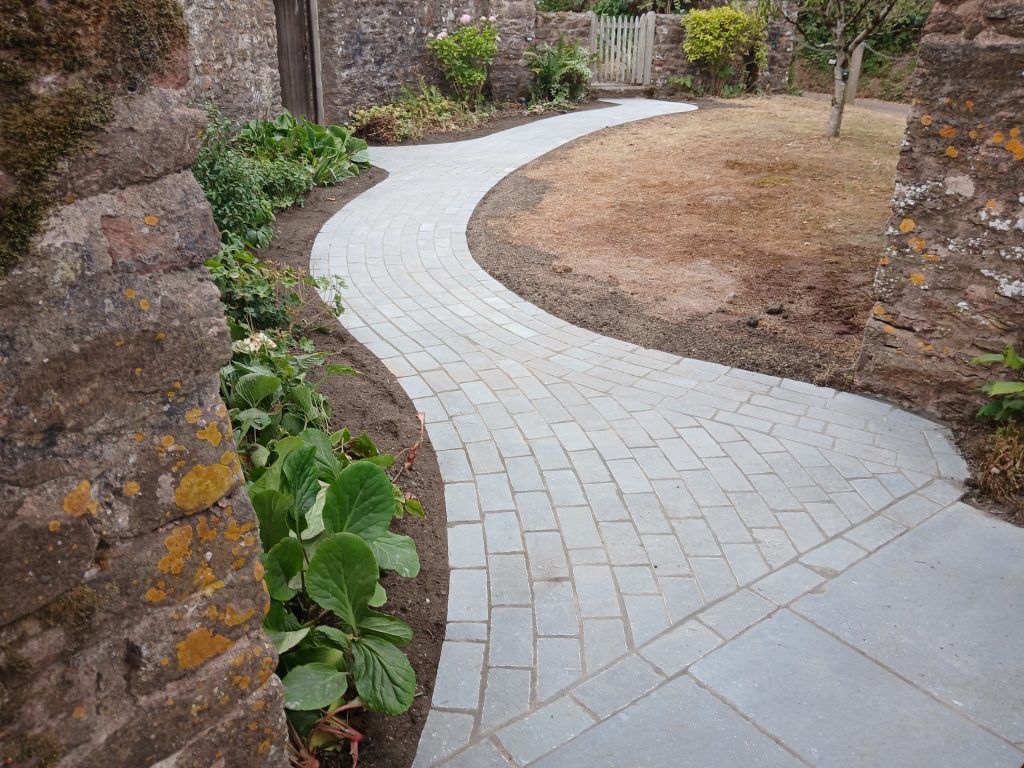
A large limestone patio might be softened with a sett border. A contemporary terrace could be framed with clay pavers. A traditional garden pathway might use small brick pavers alongside natural stone walls.
The possibilities are extensive.
The important thing is to consider the overall garden design, rather than selecting paving in isolation.
Designing Gardens in Somerset
At SilverBirch Gardens, we design and build gardens throughout Somerset, creating outdoor spaces that are designed around the property, the landscape and the people who will use them.
From contemporary patios and natural stone paving to traditional gardens, clay-paver pathways and detailed landscaping, we believe that the smaller elements of a garden can be just as important as the major features.
A paving project doesn’t have to rely solely on large slabs to make an impact.
Sometimes a carefully chosen sett, cobble or clay paver is the detail that brings the whole design together.
Whether you’re planning a small patio makeover in Somerset or a complete garden design and landscaping project, thinking about paving in terms of scale, pattern, texture and proportion can transform the finished result.
Think Small. Design Beautifully.
Large-format paving certainly has its place in contemporary garden design. But if you’re planning a new patio or garden landscaping project, don’t overlook the possibilities offered by smaller materials.
Clay pavers, limestone setts and cobbles can add character, define spaces, create transitions and introduce texture without dramatically increasing the complexity of the overall design.
At SilverBirch Gardens, we combine garden design and landscaping to create gardens that are both beautiful and practical, from individual patios and terraces to complete garden transformations across Somerset.
Thinking About Transforming Your Garden?
If you’re planning a new patio, landscaping project or complete garden transformation in Somerset, we’d be happy to discuss your ideas.
Visit silverbirchgardens.co.uk to find out more about SilverBirch Gardens and our garden design and landscaping services.